| How it’s quoted |
Level 3 |
Level 4 (standard) |
Level 5 (premium) |
| Per m² of lining |
$20 – $32 |
$30 – $45 |
$45 – $65 |
| Per standard sheet (2.88m²) |
$58 – $92 |
$86 – $130 |
$130 – $187 |
| Hourly charge-out |
$65 – $85/hr |
|
$75 – $95/hr |
| Day rate (per stopper, derived) |
$520 – $680 |
|
$600 – $760 |
| Full 3-bedroom home (280 – 320m² lining) |
$5,600 – $10,240 |
$8,400 – $14,400 |
$12,600 – $20,800 |
Those bands are wide for a reason, and the rest of this guide explains why. Ceiling height, whether your ceilings are square-stopped or coved, new build versus renovation, site access and board type can each move the number by 10 – 30%.
What you are actually paying a GIB stopper for
Stopping is the trade that turns a room full of grey board into a flat, paint-ready surface. It is not the same job as hanging the board, and the two are almost always priced separately. If you are unclear on where one ends and the other begins, our explainer on the difference between GIB fixing and GIB stopping is worth five minutes before you start collecting quotes.
A Level 4 stop involves taping every joint and internal corner, fitting external corner beads, then applying a minimum of two further coats of compound over every joint, angle, bead and fastener head – widening each coat so the build feathers out and disappears. Between each coat, the compound has to dry. In an Auckland winter that can mean 24 – 36 hours per coat rather than overnight. That is why a job that looks like two days of work is quoted as four or five days on site.
The other thing you are paying for is what happens after the plasterer leaves. Stopping is the last chance to make a wall flat. Everything the painter does afterwards either shows off that flatness or advertises the lack of it – which is exactly why we wrote how to spot a bad plastering job before painting starts.
GIB stopping cost per m² in Auckland
Per square metre is the fairest way to price stopping and the way most Auckland companies, including us, prefer to quote. It is measured on lining area – the total wall and ceiling surface being stopped – not floor area. A 150m² house typically has 280 – 320m² of lining.
| Finish level |
Labour + jointing materials |
Where it’s used |
| Level 3 |
$20 – $32/m² |
Garages, storage, above suspended ceilings, anywhere that won’t be decorated |
| Level 4 |
$30 – $45/m² |
The New Zealand default. Bedrooms, hallways, living areas, ceilings under low-sheen paint |
| Level 5 |
$45 – $65/m² |
Gloss and semi-gloss paint, dark colours, raking light, large uninterrupted walls |
| Repair / patch stopping |
$60 – $120/m² or $180 – $650 per area |
Cracks, holes, water damage, matching into existing finishes |
Repair rates look brutal per square metre, and they are – but that is because small jobs are dominated by set-up, travel and drying time rather than area. A single patch still needs three visits. If you are pricing a repair, our guides on repairing a large hole in a plaster wall and cracked ceiling joints will tell you whether re-stopping is enough or whether the board needs to come off.
GIB stopping cost per sheet
Plenty of Auckland builders talk in sheets, because that is how board is bought and how GIB fixing is often subcontracted. Stopping is less naturally a per-sheet job – a stopper works in passes across a whole room, not sheet by sheet – but the conversion is simple once you know that a standard sheet is 2400mm x 1200mm = 2.88m².
| Scope |
Per m² |
Per standard 2.4m sheet |
| Stopping only – Level 3 |
$20 – $32 |
$58 – $92 |
| Stopping only – Level 4 |
$30 – $45 |
$86 – $130 |
| Stopping only – Level 5 |
$45 – $65 |
$130 – $187 |
| Fixing labour only |
$10 – $16 |
$29 – $46 |
| Fix + stop, labour only (Level 4) |
$40 – $61 |
$115 – $176 |
| Supply, fix and stop (board included, Level 4) |
$55 – $78 |
$158 – $225 |
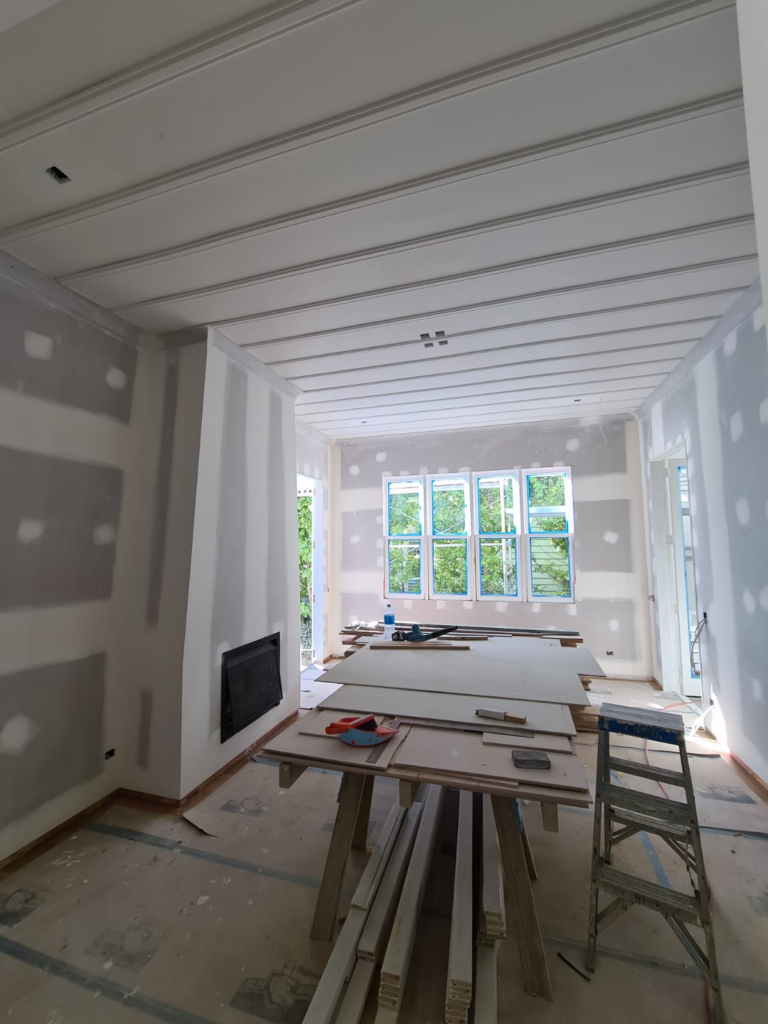
Two traps with per-sheet quoting
Sheet length changes everything. A 1200 x 4800mm sheet is 5.76m² – double a standard sheet. If one quote is “per sheet” and the job uses long sheets on the ceilings, that quote is not comparable to a per-square-metre one unless you normalise it. Always ask whether a per-sheet rate is per physical sheet or per 2.4m sheet equivalent.
Fewer, longer sheets are usually cheaper to stop. Longer sheets mean fewer butt joints, and butt joints are the slowest, most skill-intensive part of the job – they need a wider feather (500mm-plus) and are the joints most likely to show later. A builder who specifies 4.8m sheets is doing you a favour on the stopping bill.
GIB stopper hourly rate NZ: what to expect in 2026
An experienced self-employed GIB stopper in Auckland charges $65 – $85 per hour plus GST in 2026. Level 5 specialists and commercial crews sit at the top of that band or above it, around $75 – $95 per hour. A two-person team is typically $130 – $170 per hour.
| Basis |
Auckland 2026 (ex GST) |
| Standard hourly charge-out, one stopper |
$65 – $85/hr |
| Level 5 / specialist finishing |
$75 – $95/hr |
| Two-person team |
$130 – $170/hr |
| Day rate, per stopper (8 hours, derived) |
$520 – $680 |
| Minimum call-out for small repairs |
$180 – $350 |
Those figures are well above what a stopper earns as a wage, and that is normal. A charge-out rate has to cover ACC levies, public liability insurance, vehicle and tools, compound and tape, dust extraction, quoting time, and the days lost to waiting for compound to dry. Comparing a contractor’s hourly rate to an employee’s wage is the single most common reason homeowners think they are being overcharged.
When hourly is the right basis – and when it isn’t
Hourly works for repairs, patch-ups, insurance make-good and jobs where the scope genuinely cannot be defined until walls are opened up. For anything with a measurable area – a new build, a full re-line, a renovation where the board is going on fresh – insist on a fixed price per square metre or a lump sum. If a stopper wants to run a whole house on time and materials, that is a signal they have not measured the job.
Level 4 vs Level 5: the single biggest price lever
New Zealand finish levels follow AS/NZS 2589, and GIB’s own site guide is explicit: Level 4 is the default for gypsum linings unless something else is specified. Level 5 is not “Level 4 done properly” – it is a genuinely different scope. It requires tighter framing tolerances, back-blocking of all joints, and a full skim coat of compound over the entire surface, not just the joints. That skim exists to equalise porosity so paint dries at the same rate across joint compound and board paper.
|
Level 4 |
Level 5 |
| Coats over joints |
Tape + minimum 2 coats |
Tape + 2 coats + full-surface skim |
| Back-blocking |
Where specified |
All joints, walls and ceilings |
| Paint sheen it suits |
Flat and low-sheen |
Semi-gloss, gloss, dark colours |
| Auckland rate |
$30 – $45/m² |
$45 – $65/m² |
| Extra time on a 3-bed house |
– |
+2 to 4 days |
Roughly speaking, Level 5 adds 45 – 50% to the stopping bill. Whether that is money well spent depends almost entirely on your lighting and your paint. Our guide to Level 4 vs Level 5 plaster finish walks through the decision room by room, and choosing the right paint finish covers the other half of the equation. A useful rule: if a wall gets raking light from a window or a downlight washing down it, or you are going dark, budget for Level 5 on that wall only. You do not have to do the whole house.
Nine things that change your GIB stopping price in Auckland
1. Ceiling and stud height
Standard 2.4m stud is the baseline. At 2.7m you are on stilts or trestles for longer. Above 3m, or in a stairwell or void, you are into scaffolding and two-person handling. Expect +15 – 25%, and more where scaffold hire is a separate line.
2. Square-stopped vs coved ceilings
A coved (scotia) wall-to-ceiling junction is faster and far more forgiving – the cove hides movement and cracking. A square-stopped junction is a stopping job in itself: it has to be dead straight over the full length of the room and it is the first thing that cracks if the framing moves. Budget $12 – $22 per linear metre extra for square-stopped junctions compared to a coved equivalent, and treat square stopping as a Level 5 conversation if you are running long, unbroken ceiling lines.
3. New build vs renovation
New builds are the cheapest per square metre: clear site, full runs, no protection, no matching. Renovation work adds 15 – 30% because of masking and floor protection, working around existing finishes, dust control in an occupied home, and the near-certainty that the old framing is not flat. Matching new stopping into a 1930s bungalow wall is skilled work, not filling.
4. Access, parking and stairs
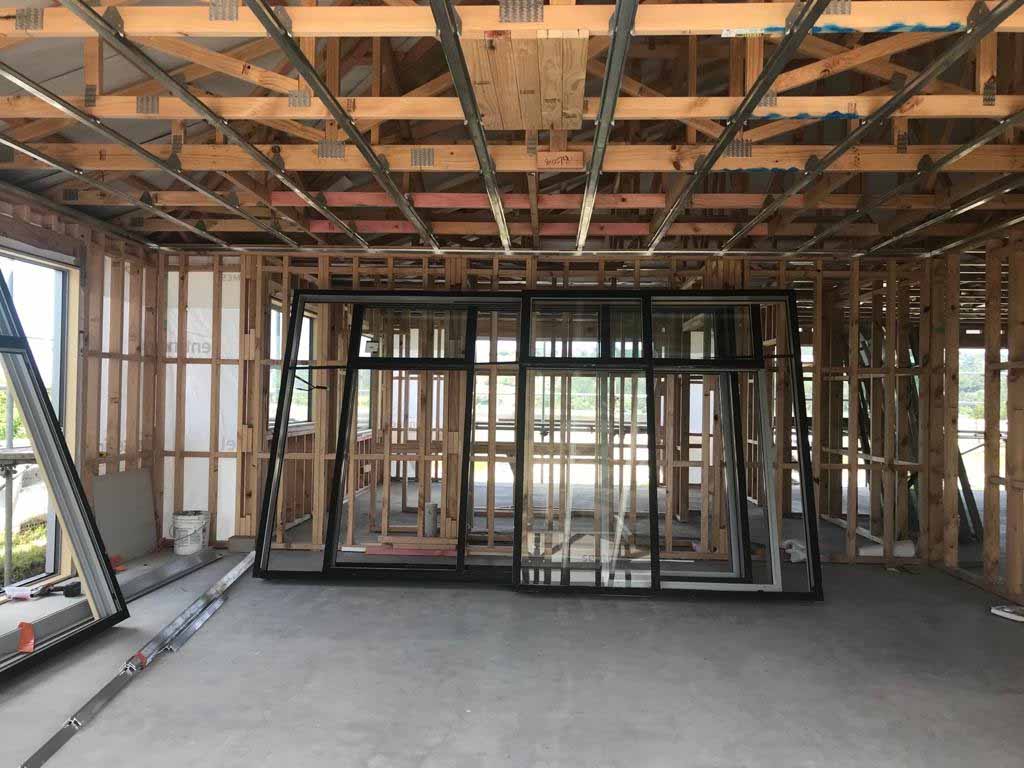
A Grey Lynn villa with no off-street parking and a narrow side path costs more to stop than an identical house in Albany with a double garage. Carrying compound and tools 40 metres, on the clock, several times a day is real money. Apartments and second-storey work with no lift access can add 5 – 15%.
5. Board type
Different boards behave differently under the knife and some need different compounds or a set-time product. Wet-area board in bathrooms and laundries, bracing and acoustic board, and fire-rated board all change the mix. Our guides to the best plasterboard for bathrooms, laundries and kitchens, acoustic plasterboard between rooms and fire-resistant plasterboard cover when each is worth specifying. Board itself is a separate cost again – currently around $30 – $47 per standard sheet at retail, less on a trade account.
6. Corners, penetrations and room shape
Price follows joint length and corner count, not floor area. Four bedrooms of 12m² each cost meaningfully more to stop than one 48m² open-plan living space. Bulkheads, niches, cavity slider heads, downlights, vents and window returns all add stops and starts.
7. Time of year
Auckland’s humidity is a scheduling cost, not a rate cost – but it hits your programme. Through the wet months, air-drying compound can take 24 – 36 hours between coats instead of overnight. Good stoppers switch to setting compounds for the base coats to hold the programme, which is a materials cost rather than a labour one.
8. Where you are in Auckland
Central and inner-eastern suburbs typically run 10 – 15% above outer Auckland, driven by access, parking and site constraints more than postcode premiums. Rates further north – GIB stopping on the North Shore, Whangaparāoa, Warkworth and Mangawhai – are broadly comparable, with travel becoming a factor on smaller jobs.
9. What isn’t in the quote
Rubbish removal, floor protection, making good after other trades, and a second sanding visit after the builder’s fix-out are the four most common omissions. They are also the four most common sources of a “surprise” variation.
Worked example: a 3-bedroom Auckland home, 2026
A 155m² three-bedroom single-storey home in East Auckland. Standard 2.4m stud with a 3.2m raked ceiling in the living area. Coved ceilings throughout except the living room, which is square-stopped. New build, so the site is clear.
| Item |
Quantity |
Rate |
Cost |
| Level 4 stopping – walls and ceilings |
295m² |
$36/m² |
$10,620 |
| Level 5 upgrade – living room feature wall + raked ceiling |
38m² |
+$22/m² |
$836 |
| Square-stopped junctions – living area |
21 lm |
$16/lm |
$336 |
| High-stud allowance – raked ceiling access |
– |
+18% on 38m² |
$246 |
| Wet-area detailing – 2 bathrooms + laundry |
– |
Allowance |
$420 |
| Return visit – make good after fix-out |
1 day |
$580 |
$580 |
| Rubbish removal and site clean |
– |
Allowance |
$280 |
| Subtotal (ex GST) |
|
|
$13,318 |
| Total incl. GST (15%) |
|
|
$15,316 |
Sanity checks on that number: it works out at $45/m² ex GST across the whole house ($52/m² including GST), or about $130 per 2.4m sheet equivalent across 102 sheets. Both sit exactly where you would expect for a well-specified Auckland new build with a couple of premium elements.
How the same house moves: take it to Level 5 throughout and you add roughly $5,650. Make it a renovation with the family still living there and you add 15 – 30%, or $2,000 – $4,000. Drop it to coved ceilings and Level 4 everywhere and you save around $1,170. Add GIB fixing and board supply and you are looking at a combined figure of $15,500 – $25,000 ex GST.
When a cheap GIB stopping quote costs you more
If one quote comes back 35% under the others, it is not a bargain – it is a different job. In practice, a cheap stopping quote is usually buying you one of five things.
- Two coats instead of three. Level 4 requires tape plus a minimum of two further coats. Skipping the third is invisible on the day and obvious under a light six months later.
- No back-blocking on butt joints. Faster now, cracked later, particularly on ceilings.
- Rushed drying. Coating over compound that hasn’t fully dried is the single most common cause of joints that shrink, crack and telegraph through the paint.
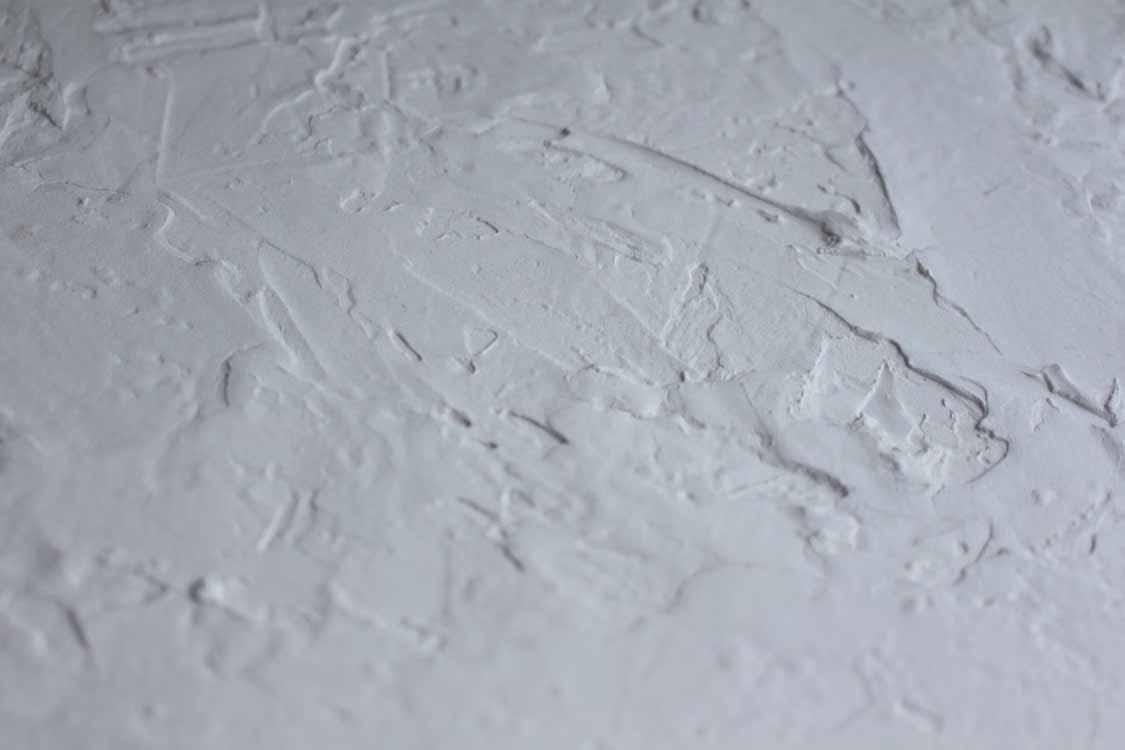
- Sanding instead of feathering. Over-sanding raises the board’s paper nap. Paint then dries to a different sheen over the joint – the flashing you see on a wall lit from the side.
- No allowance for making good. The variation arrives later, and it is not competitive by then.
The maths of fixing it is unforgiving. Re-stopping a failed Level 4 wall means sanding back, re-taping, three fresh coats, then a full re-prime and repaint of the affected area – commonly two to three times what doing it properly would have cost, plus the disruption of having your finished house back on the tools. It is the same pattern we set out in our post on why cheap painters in Auckland can cost you more: the trade that follows always pays for the trade that cut corners.
Any experienced painting crew will tell you the same story – the specialists at Painters North Shore reject or price a remedial allowance on plastering they inherit for exactly these reasons. A painter can only ever be as good as the surface they are handed.
How to get a GIB stopping quote you can actually compare
Give every stopper the same information and you will get comparable numbers back. Have this ready before you call:
- Lining area in m², or plans with room dimensions and ceiling heights
- The finish level you want, room by room – not just “a good finish”
- Whether ceilings are coved or square-stopped
- Board type and sheet lengths, if already specified
- Paint sheen and colour, especially anything dark or above low-sheen
- Access, parking and whether the house is occupied
- Your programme dates and who is doing the fixing
Then check that every quote states: the finish level by room, the number of coats, whether GST is included, what’s allowed for making good after fix-out, who removes the rubbish, and how variations will be priced. A quote that says “GIB stopping – $9,500” and nothing else is not a quote, it is a number.
Sensible ways to bring the cost down
There are legitimate savings available that don’t compromise the finish:
- Be selective with Level 5. Feature walls, raked ceilings and anything under raking light. Bedrooms and hallways rarely justify it.
- Specify longer sheets. Fewer butt joints means less of the slowest work.
- Get the framing right first. Compound is an expensive way to correct a bowed stud. This is also why battening a ceiling properly pays for itself.
- Bundle the trades. Running fixing, stopping and painting through one contractor removes the gap between trades where responsibility gets lost – and removes the mobilisation cost of three separate crews.
- Empty the house if you can. An empty house is faster, cleaner and cheaper to stop than an occupied one, and it removes the dust and drying constraints entirely. For a full re-line on the North Shore, a short-term move out with a local firm like Movers North Shore often costs less than the renovation premium you’d otherwise pay – and it gets the job done in half the calendar time.
Frequently asked questions
How much does GIB stopping cost per m² in Auckland?
$30 – $45 per square metre for a standard Level 4 finish in 2026, covering labour and jointing materials but not the board itself. Level 3 runs $20 – $32/m² and Level 5 runs $45 – $65/m². Repair and patch stopping is charged differently, usually $60 – $120/m² or a per-area price.
What is the GIB stopper hourly rate in NZ?
An experienced Auckland GIB stopper charges $65 – $85 per hour plus GST in 2026, with Level 5 and commercial specialists at $75 – $95. A two-person team is $130 – $170 per hour. Auckland sits at the top of the national range – Christchurch and provincial centres typically run 10 – 15% lower.
How much does it cost to GIB stop a 3-bedroom house in NZ?
Budget $8,400 – $14,400 plus GST for Level 4 stopping on a typical three-bedroom Auckland home with 280 – 320m² of lining. Add GIB fixing and board supply and the combined figure is usually $15,500 – $25,000 plus GST.
How much is GIB stopping per sheet?
Around $86 – $130 per standard 2400 x 1200mm sheet for a Level 4 finish, derived from per-square-metre rates at 2.88m² per sheet. Always confirm whether a per-sheet quote refers to physical sheets or 2.4m sheet equivalents – a 4.8m sheet is two sheets’ worth of area.
Is Level 5 worth the extra cost?
On walls with raking light, dark paint colours, or semi-gloss and gloss finishes, yes – Level 4 will show joints under those conditions no matter how well it’s done. On bedrooms and hallways painted low-sheen, it is money you don’t need to spend. Apply it selectively.
How long does GIB stopping take?
Four to seven working days for a three-bedroom house, driven by drying time rather than labour hours. Each coat needs to dry fully before the next goes on – overnight in summer, 24 – 36 hours in an Auckland winter. A Level 5 finish adds two to four days.
Do GIB stopping quotes include GST?
It varies, and it’s a 15% difference, so always ask. Trade-to-trade quotes are usually ex GST; a quote given to a homeowner should be GST-inclusive. Never compare one of each without adjusting.
Can I do GIB stopping myself?
A small patch in a garage or wardrobe is realistic DIY. Whole rooms are not, for one reason: the failure mode is invisible until the paint goes on. Feathering a butt joint over 500mm, judging when compound is dry, and sanding without raising the paper nap take a long time to learn, and the cost of getting it wrong is a full repaint.
Does GIB stopping cost more for high ceilings?
Yes. Above 2.4m expect 15 – 25% more, and above 3m expect scaffolding as a separate cost. Raked ceilings and stairwell voids are the most expensive areas in any house to stop.
What’s the difference between GIB stopping and plastering?
GIB stopping finishes the joints between plasterboard sheets. Traditional or solid plastering covers whole surfaces, and fibrous plaster repair – common in Auckland’s older villas and bungalows – is a related but separate skill that costs roughly double. Our interior plastering page covers both, and drywall vs plaster will help you work out what you’ve got.
Do I need GIB stopping before painting?
Yes. Unstopped board shows every joint, screw head and paper edge through paint, and the board’s paper face absorbs paint differently to compound. Stopping and priming are both non-negotiable before the first topcoat.
How much does commercial GIB stopping cost?
Commercial rates are often lower per square metre than residential because of scale and clear-site access, but programme pressure, after-hours work and higher finish specifications can push them well above. Our guide to commercial plastering and fit-out solutions covers how these jobs are priced, along with suspended ceiling systems.
Get a fixed price on your Auckland GIB stopping
Above Board Interiors has been stopping walls and ceilings across Auckland since 2007 – more than 2,000 projects, from single-room renovations to apartment towers and retirement villages. We quote per square metre with the finish level stated room by room, so you know exactly what you’re getting and exactly what it costs.
Take a look at our recent projects, read more about our team, or see our full GIB stopping Auckland service. When you’re ready for a number you can build a budget on, get in touch or call 021 446 716.