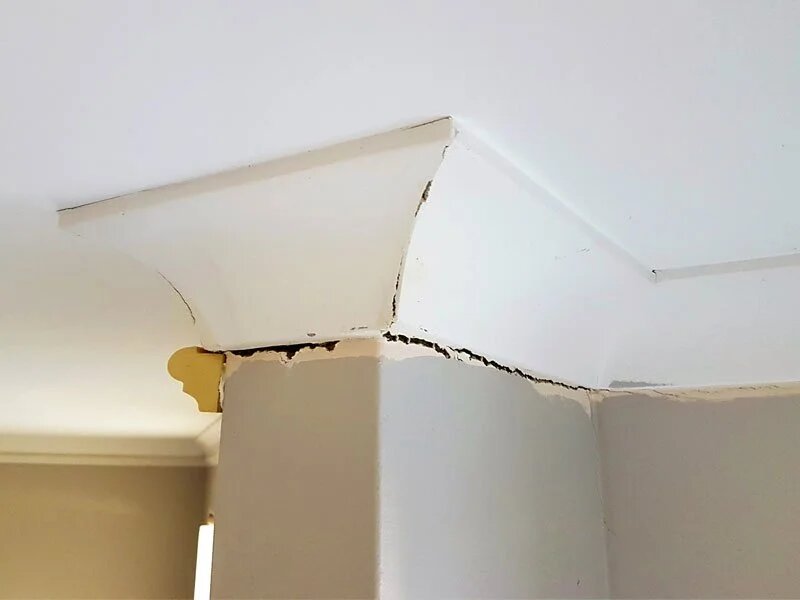
Why Ceiling Joints Crack In The First Place
Ceiling joints crack for a few common reasons:
- movement in the framing or trusses
- poor original GIB fixing
- insufficient stopping or weak tape reinforcement
- moisture or water damage
- structural settling
- repeated temperature or humidity changes
Some movement is minor and can be repaired at the surface. Other movement keeps coming back because the joint is under ongoing stress or the plasterboard itself has not been set properly.
That is why cracked joints should never be treated as a filler-and-paint problem by default.
When Re-Stopping Is Usually Enough
Re-stopping is often enough when the crack is small, localised, and the surrounding ceiling is still sound. If the plasterboard sheets are stable, the framing is not obviously moving, and there is no sagging or moisture damage, the joint may simply need to be opened up, reinforced properly, and refinished.
This usually works best when:
- the crack is fine rather than wide
- it is limited to one or two areas
- the ceiling line is still flat
- the board feels firm
- there is no staining, bubbling, or softness nearby
The damaged joint area needs to be assessed, prepared properly, taped where needed, built back up carefully, and sanded so it blends into the surrounding surface. Our GIB® stopping work is often the right solution when the issue is confined to the finish layer rather than the board underneath.
Signs The Crack May Be Deeper Than The Surface
Some ceiling cracks tell you straight away that re-stopping alone is unlikely to last. If the joint keeps reopening, runs for a long distance, or is paired with movement, sagging, or other visible problems, the cause may sit below the stopping layer.
Warning signs include:
- the same crack has been repaired before
- the crack is getting wider
- several joints are affected
- the ceiling is no longer reading flat
- there are screw pops nearby
- the board feels loose or unstable
- water damage or staining is present
In those cases, the joint itself may not be the real problem. The plasterboard may need replacing, or the fixing may need to be corrected before the ceiling can be finished properly again.
When It Is Time To Re-GIB
Re-GIBing becomes the smarter option when the plasterboard has lost integrity or the ceiling is moving in a way that surface repairs will not solve. If the board is damaged, poorly fixed, water-affected, or repeatedly failing along the same lines, replacement often gives a cleaner and more reliable result.
It is usually time to re-GIB when:
- the joint has failed badly and repeatedly
- the board is sagging or cracked in multiple places
- old repairs are visible and breaking down
- moisture has softened the plasterboard
- the original fixing is poor
- you need a long-term fix, not another patch-up
Our GIB® fixing specialists handle this kind of ceiling work where damaged areas need to be cut out and replaced properly before stopping begins again.
Why Painting Over Cracked Joints Does Not Work
A lot of cracked ceiling joints get painted over after a quick patch, especially when the crack looks minor. The problem is that ceiling joints are highly visible once light hits them. If the repair is weak or the board is still moving, the line usually comes back through the paint.
Paint can make a crack look tidier for a short time, but it does not solve movement, failed tape, poor fixing, or soft plasterboard. If the ceiling is not stable underneath, the surface finish will not stay clean for long.
That is why we look at cracked joints as a diagnostic issue first, not a decorating issue first.
Ceiling Light Makes These Problems Worse
Ceilings are unforgiving because light moves across them differently than walls. A joint that seems minor during the day can stand out badly under downlights, morning sun, or evening side light.
That is one reason we take cracked ceiling joints seriously. Even a small defect can affect the whole room visually if it runs through a central area or shows up under strong lighting. In open-plan living spaces, hallways, and modern homes with flatter finishes, this matters even more.
If the ceiling has wider wear or related issues, our interior plastering work helps get the overall surface to a better standard before final finishing.
How We Decide Which Option Makes Sense
The best way to choose between re-stopping and re-GIBing is to assess:
- the width and length of the crack
- whether it has been repaired before
- the condition of the surrounding board
- signs of movement or water damage
- how visible the area is in the finished room
If the issue sits at surface level, re-stopping can work well. If the board or fixing underneath is the real problem, re-GIBing usually saves time and money in the long run.
Once the ceiling is sound again, our house painting team can take it through to a clean final finish.
Deal With The Cause, Not Only The Crack
A cracked ceiling joint can be minor, or it can be a sign the ceiling needs broader work. The important thing is not guessing based on appearance alone. Some joints respond well to careful re-stopping. Others need the damaged section removed and replaced if you want the repair to hold up properly.
If you have cracked ceiling joints and you are not sure which way to go, get in touch with us. We can assess the condition of the ceiling, tell you whether re-stopping is enough or whether it is time to re-GIB, and help you get it sorted properly the first time.
Get in Touch