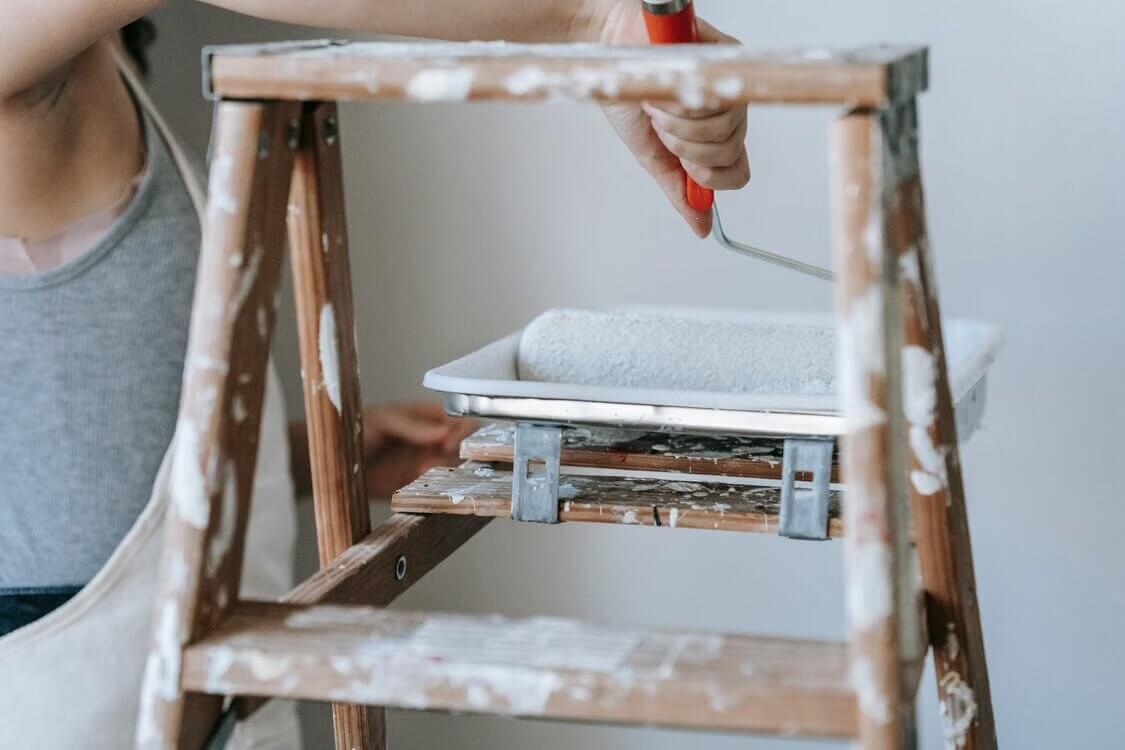
Typical Timeframes By Job Size
As a guide, for two painters working in good drying conditions:
- One bedroom, walls and ceiling: 1 to 2 days
- Open-plan living, kitchen and hallway: 3 to 4 days
- Three-bedroom home, walls and ceilings: 5 to 7 working days
- Three-bedroom home with doors, trim and window frames: 8 to 12 working days
These assume sound surfaces and two coats. We firm the numbers up at the site visit, once we have seen the walls in daylight.
Where The Days Go
Painting is the short part.
The first stretch of any room is preparation. Furniture is moved and covered, floors are sheeted and fittings are masked. Holes are filled, cracks are raked out and filled, glossy surfaces are sanded, gaps along skirtings and architraves are sealed, and stains are spot primed. In a tidy modern home, that equates to a few hours a room. In an older one it can be the largest part of the job.
Then the order is fixed: ceilings first, walls second, trim and doors last.
Most water-based wall paints can be recoated after a couple of hours in good conditions, so two coats on walls in a day is realistic. Enamels on doors and trim want longer, often overnight. Trim is slow for that reason. A door needs both faces and all its edges painted, with drying time before it can be closed again.
What Adds Time
Plaster repairs. A crack or patch needs three coats of compound with drying between each, which usually means three short visits over two or three days before it is ready for paint. Paint over a damp repair and the patch shrinks back and shows as a hollow within weeks. Our plasterers handle ceiling and wall repairs ahead of the painters, so that drying time overlaps with prep in other rooms.
A big colour change. Going from dark to light, or the reverse, usually means a third coat.
Stains. Old water marks and smoke staining need a stain-blocking primer first, or they bleed back through the new paint.
Wallpaper. Stripping it often tears the paper face of the plasterboard underneath. That surface has to be sealed and skimmed before it can be painted, which adds days.
Auckland humidity. In a warm, wet week with the house closed up, paint stays tacky for far longer than the tin suggests. We keep windows open and air moving, and we do not recoat until the first coat is ready.
High studs and stairwells. A villa with a 3m stud or a stairwell void needs platforms or scaffolding, and every coat takes longer to cut in.
Living in the house. Working room by room around a family is slower than painting an empty home, because each room is set up and packed down separately.
How Sheen Changes The Prep
The finish you choose affects the timeframe as well. Flat and low sheen paints are forgiving. A higher sheen, or a wall with downlights and big windows throwing light along it, shows every join and patch underneath.
Because we are plasterers as well as painters, we look at the stopping before we talk about colours. Sometimes the right advice is a lower sheen. Sometimes it is a day of skim coating first.
Our paint sheen guide explains which finish suits which room.
Working Back From Christmas
Most trades close for two to three weeks over Christmas and New Year, and the last fortnight before the break is the busiest of the year. So count back from the day you want the furniture back in place.
- Leave a few days at the end. Paint is dry to the touch in hours and takes a few weeks to cure fully, so rehang pictures gently and hold off scrubbing new walls.
- Take the job length from the guide above.
- Add the plaster repairs in front.
- Settle colours before day one. Put test pots on the wall the week before. A colour change mid-job costs at least a day.
For a three-bedroom home with trim and a handful of repairs, that puts the start date in late November at the latest. A single living area can still fit into the second week of December.
If a renovation is involved and new board is going up, the walls must be stopped and dry before any paint. Our guide to how long GIB® fixing and stopping take covers that stage.
When the dates do not work, split the job. Do the living areas, hallway and guest room before Christmas, and the remaining bedrooms in the new year.
What You Can Do To Keep It Moving
A few things on your side make a real difference to the finish date.
- Clear the small things. Take down pictures, curtains and blinds, and box up what sits on shelves and benchtops. We shift and cover the heavy furniture, and an hour saved in each room adds up across a whole house.
- Confirm colours in writing. List them room by room, including ceilings, doors and trim, so nobody is guessing on the day.
- Tell us what is hidden. A leak that has been fixed, a crack that keeps coming back, a wall that used to be papered. Surprises found on day three are what push a finish date out.
- Keep traffic out overnight. Fresh enamel on doors and skirtings marks easily for the first day, so plan where pets and children will be.
When You Do Not Need A Full Repaint
If the walls are in good order and you are keeping the same colour, you may only need ceilings and the high-traffic areas done. Hallways, the kitchen and the lounge take the wear. Bedrooms often have years left in them.
Scuffs and marks frequently wash off with sugar soap. And where a wall does need attention, repaint that whole wall from corner to corner. Touch-ups rarely blend in, even from the same tin, because the old paint has faded and the patch catches the light differently.
Get Your Dates Sorted Before You Choose Colours
If you want the inside painted before Christmas, ask our house painting team for a site visit now. We will look at the walls and ceilings, tell you which repairs are needed first, and give you a start and finish date you can plan around.
On the Shore? Our Painters in the North Shore can do the same for you.
Get in Touch