
Worried your villa, bungalow or 1970s reno might still have lead‑based paint? This guide explains the risks, how to test, the safest removal methods, and when it’s time to call a professional. In New Zealand, the biggest source of non‑occupational lead exposure is old lead paint, especially in homes built before the mid‑1960s and often up to the 1980s where older layers may sit beneath new topcoats. If you’re unsure, assume lead may be present and follow the steps below.
Homeowners Guide to Removing Lead‑Based Paint Safely in NZ
Request A free Quote Today!
Why lead exposure is dangerous
Anyone can be harmed by lead; children under six and pregnant people are most at risk. Even small amounts can affect development, learning, and growth. In adults, lead exposure can contribute to cardiovascular, kidney and reproductive issues. If you’re renovating, plan to manage lead safely from the start.Guidance from Health New Zealand outlines the risks and safe work practices, for removing lead paint.
How to test for lead‑based paint in NZ
- Spot test (5% sodium sulphide): Carefully expose the deepest paint layer, apply a drop of 5% sodium sulphide solution, and look for a brown/black reaction – an indicator that lead is present. This is commonly used in NZ as a quick qualitative screen.
- Public health advice: If you’re uncertain, contact your local public health service (Health NZ) for guidance on testing and risk management.
- Beyond testing for lead you should consider this: Testing is only step one-assume any sanding or removal can generate hazardous dust and plan controls accordingly.
If your paint tests positive, before deciding how to proceed, you need to assess the paint’s age, how well it’s bonded to the substrate, and whether it sits on areas that are prone to wear or moisture. This evaluation helps you pick one of two practical pathways:
- Encapsulation (overcoating): If the paint is sound (no flaking, chalking or damage), applying a fresh, non‑hazardous coating can isolate the lead layer. This is an interim risk‑reduction approach; it doesn’t remove the lead source and isn’t suitable for areas a child or pet could chew or damage.
- Full removal: If the coating is deteriorating – or if you intend to disturb it during renovations – controlled removal is the only way to eliminate the source. Plan thoroughly and follow NZ guidance.
For best practice methods and controls, see Health NZ and WorkSafe’s guidance on managing lead‑based paint.
DIY precautions for safe‑removal of paint with lead
Lead removal is inherently risky. The safest option is hiring a trained professional. If you proceed yourself, work methodically and follow recognised NZ guidance.
1) Protect yourself
- Wear a properly fitted toxic dust respirator (P2 or equivalent) that meets AS/NZS 1716:2012; if using a disposable type, ensure it has double head‑straps.
- No eating, drinking or smoking in the work zone; wash hands/face before breaks and before contact with children.
- Use disposable overalls, cover hair, and launder contaminated clothing separately.
2) Prepare the work area
- Keep children and pets away and limit access to essential personnel only.
- Indoors: Remove curtains/furniture where practical; cover floors and fixtures with tightly sealed drop sheets. After sanding, wet‑wipe and then HEPA‑vac surfaces.
- Outdoors: Close doors and windows; capture debris on a large groundsheet and tie a catch sheet under scaffolds. Avoid conditions that spread dust. Never burn debris.
3) Choose safer removal methods
- Wet sanding / wet scraping (preferred): Keeps dust down – go slow, keep surfaces damp, and collect debris as you go.
- Dry sanding (hand or machine): Only with vacuum extraction/HEPA; still produces dust – use full PPE and room controls.
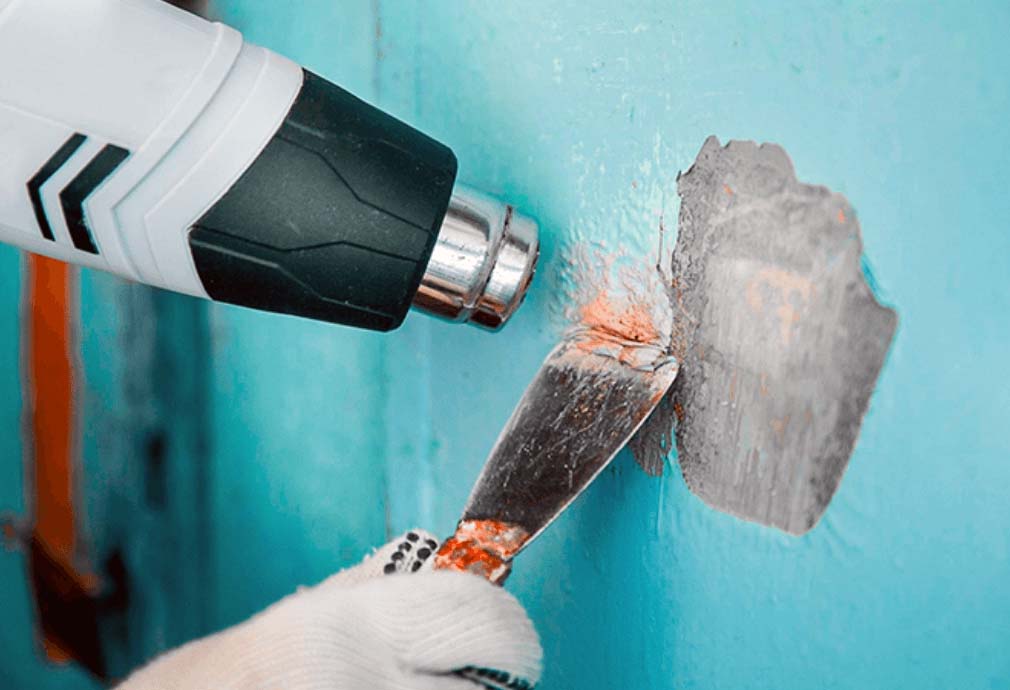
- Heat: Hot‑air guns and blow torches can release lead fumes and add fire risk; if used, ventilate well and wear the correct respirator.
- Chemical strippers: Useful on small, detailed areas (e.g., window frames). Wear gloves/eye protection and ventilate; follow the label.
- Water‑blasting (exterior only): Possible on some substrates, but you must collect flakes and prevent spread to neighbouring properties. Note that abrasive blasting is not suitable for buildings painted/built before 1970 due to lead dust generation.
4) Clean‑up thoroughly
- HEPA‑vac floors and surfaces, then wet‑wipe and HEPA‑vac again. Dispose of vacuum contents immediately.
- Seal debris in sturdy plastic bags/containers. Small amounts can go to regular refuse or the local tip; check with your council if unsure. Do not burn lead paint debris.
When to call Above Board Interiors
Choose professional help when:
- Large areas or badly deteriorated coatings are involved
- You’re working overhead, on exteriors near neighbours, or on complex details (windows, trims)
- You need encapsulation plus repainting, GIB® repairs, or a full interior repaint once the hazard is controlled
Above Board Interiors follows NZ guidance and safe work methods aligned with WorkSafe and Health NZ recommendations for managing lead‑based paint. We can coordinate lead‑safe prep, encapsulation and repainting, plus any plasterboard repairs (GIB® fixing & stopping ) needed for a flawless finish.
If you think you’ve been exposed
Symptoms can be subtle or absent. If you suspect exposure – especially for children or during pregnancy – see your GP for a blood test. Health NZ notes the notifiable blood lead level was lowered in April 2021 so public health can act sooner to protect people.
FAQs
Q1: Is lead‑based paint still used in New Zealand?
Today, only special‑purpose paints may contain lead and these products are clearly labelled. Older coatings in pre‑1980 homes may still contain lead beneath newer paint layers.
Q2: What’s the quickest way to check for lead paint?
A 5% sodium sulphide spot test provides a rapid yes/no indication when applied to the deepest paint layer. For confirmation or advice, contact your local public health service.
Q3: What’s the safest DIY method?
Wet sanding/wet scraping creates the least dust. Dry sanding requires extraction and full PPE; heat methods can generate lead fumes.
Q4: Which respirator should I wear?
A properly fitted P2 (or better) respirator meeting AS/NZS 1716:2012, ideally with double head‑straps for disposables.
Q5: How do I dispose of debris?
Bag and seal waste; small amounts can go to household refuse/tip—never burn it. If unsure, check with your local council
Q6: When should I get professional help?
For large areas, poor‑condition coatings, exteriors near neighbours, overhead work, or when you need repairs and repainting handled end‑to‑end.
Q7: I’m worried about exposure – what now?
Speak to your GP about a blood test. NZ’s notifiable blood lead level was lowered in 2021 to enable earlier public health action.