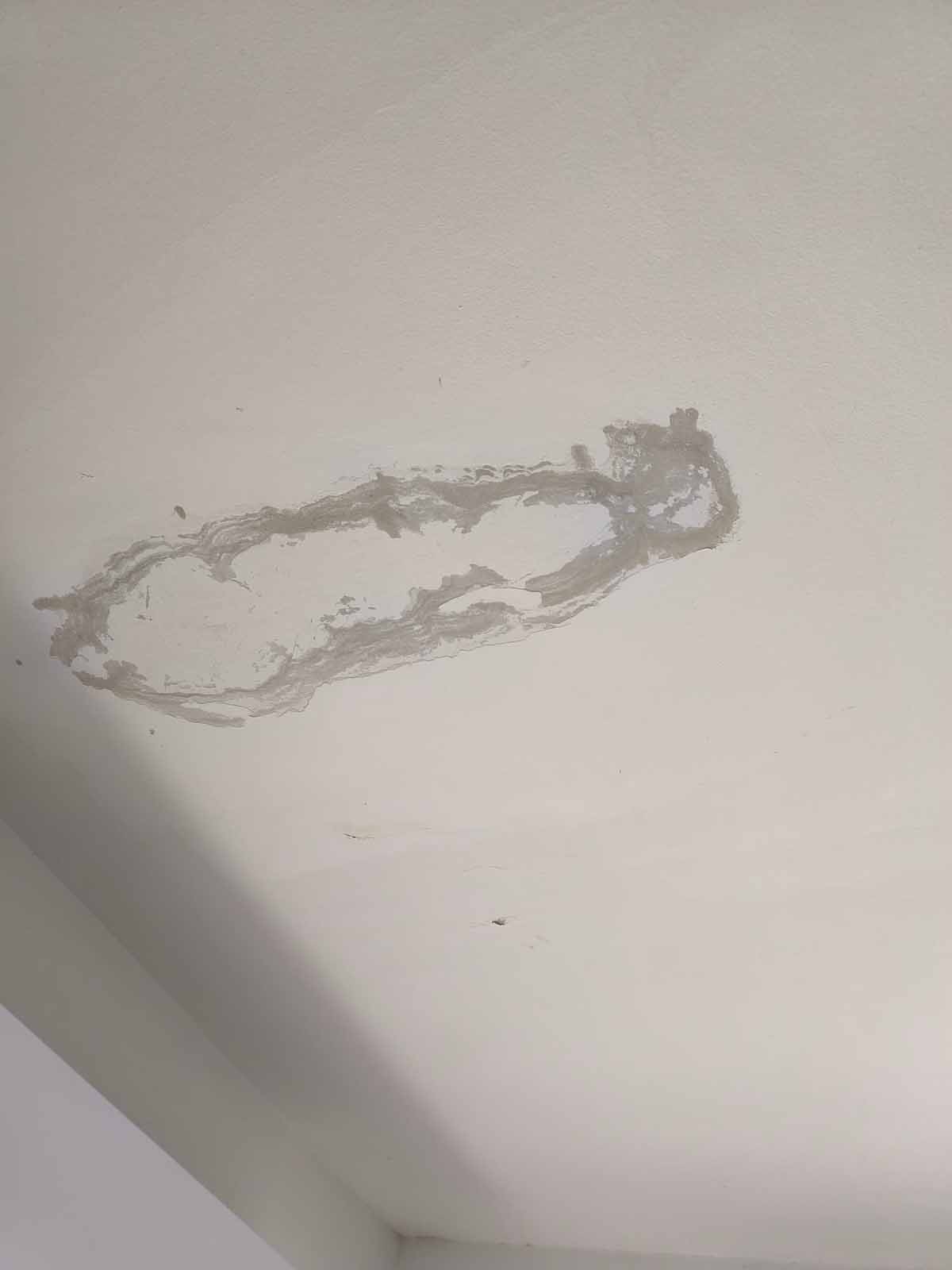
Start With The Cause, Not The Stain
Before deciding whether to repair, re-GIB, or repaint, the first step is to make sure the source of the water has been dealt with. If there is still an active roof leak, a plumbing issue, or moisture building up from poor ventilation, any surface fix will be temporary.
This matters because paint and plastering products are only going to perform properly on a dry, stable surface. If moisture is still present, stains can bleed through again, paint can blister, and stopped areas may fail prematurely. A ceiling that has been exposed to water needs to be assessed properly before the cosmetic work begins. That same finish-first approach runs through the way we handle GIB® fixing, GIB® stopping, and house painting across Auckland.
When A Repaint Is Enough
A repaint can be the right answer when the damage is old, the leak has been fixed, and the plasterboard underneath is still sound. In these cases, the ceiling may only have light staining or minor cosmetic marks without sagging, softness, swelling, or joint movement.
If the substrate is stable, the repair process is usually straightforward:
- clean and prepare the surface
- seal the stain properly
- patch any small imperfections
- repaint for a clean, even finish
The important part is the stain-blocking and prep. If you skip that and paint straight over a water mark, it often comes back through the new coating. When the ceiling is still structurally sound, a carefully prepared repaint can give a very good result, especially if the rest of the ceiling surface is in decent shape. Our house painting team handles a lot of this type of remedial work once the surface has been assessed properly.
When Repair Work Makes More Sense
If the water damage has left cracking, joint movement, small soft spots, or localised bubbling, but the surrounding plasterboard is still largely intact, a targeted repair is often the better option.
This usually means:
- cutting back compromised areas if needed
- stabilising the substrate
- replacing or patching the affected section
- re-taping and stopping the joins
- sanding and repainting the area cleanly
This is often the right middle ground. It avoids replacing a larger ceiling area unnecessarily, but still deals with the damaged section properly rather than trying to hide it under paint. Our interior plastering specialists and GIB® stopping team are often involved at this stage, because water damage has a habit of leaving uneven surfaces that need more than a cosmetic touch-up.
When It Is Better To Re-GIB The Ceiling
Sometimes the ceiling has gone too far for patching or repainting to be worth it. If the plasterboard is swollen, sagging, soft to the touch, mould-affected, or badly stained across a larger area, replacement is usually the smarter long-term option.
Re-GIBing tends to make sense when:
- the board has lost its integrity
- water exposure has been prolonged
- the affected area is large
- joints have failed badly
- previous patch repairs are already showing through
In those cases, replacing the damaged plasterboard gives you a cleaner, more reliable base than trying to rescue material that has already broken down. Once new board is installed, the stopping and plastering can be done properly, which usually leads to a much better finish after painting. Our GIB® fixing service is designed for exactly this kind of situation, especially where damaged ceilings need to be brought back to a paint-ready standard.
The Signs That Tell You Which Way To Go
A few practical signs can help point you in the right direction.
A repaint may be enough if:
- the stain is light
- the board feels firm
- there is no sagging or bubbling
- the leak has definitely been fixed
A repair is usually better if:
- there are localised cracks or soft areas
- the damage is limited to one section
- the surrounding ceiling is still sound
Re-GIBing is often the right call if:
- the board is swollen or sagging
- there is widespread staining
- the plasterboard has softened
- old repairs are failing
- the ceiling no longer feels solid
If you are unsure, it is better to assess the board properly before doing anything decorative. A ceiling can look salvageable from below and still be too far gone once you inspect it closely.
Get The Ceiling Properly Assessed Before You Spend Money On Paint
Ceiling water damage can sit anywhere on the scale from a simple repaint to a full section replacement. The trick is knowing which one makes sense before you start spending money on the wrong fix.
If the board is dry, sound, and only lightly marked, repainting may be all you need. If the damage has affected the surface quality, a repair and re-stop could be the right call. If the plasterboard has softened or failed, re-GIBing usually gives the best long-term result.
If you have a stained, cracked, or sagging ceiling and you are not sure which way to go, get in touch with us. We can look at the condition of the ceiling, tell you whether it needs repair, replacement, or repainting, and help you get it sorted properly the first time.
Get in Touch